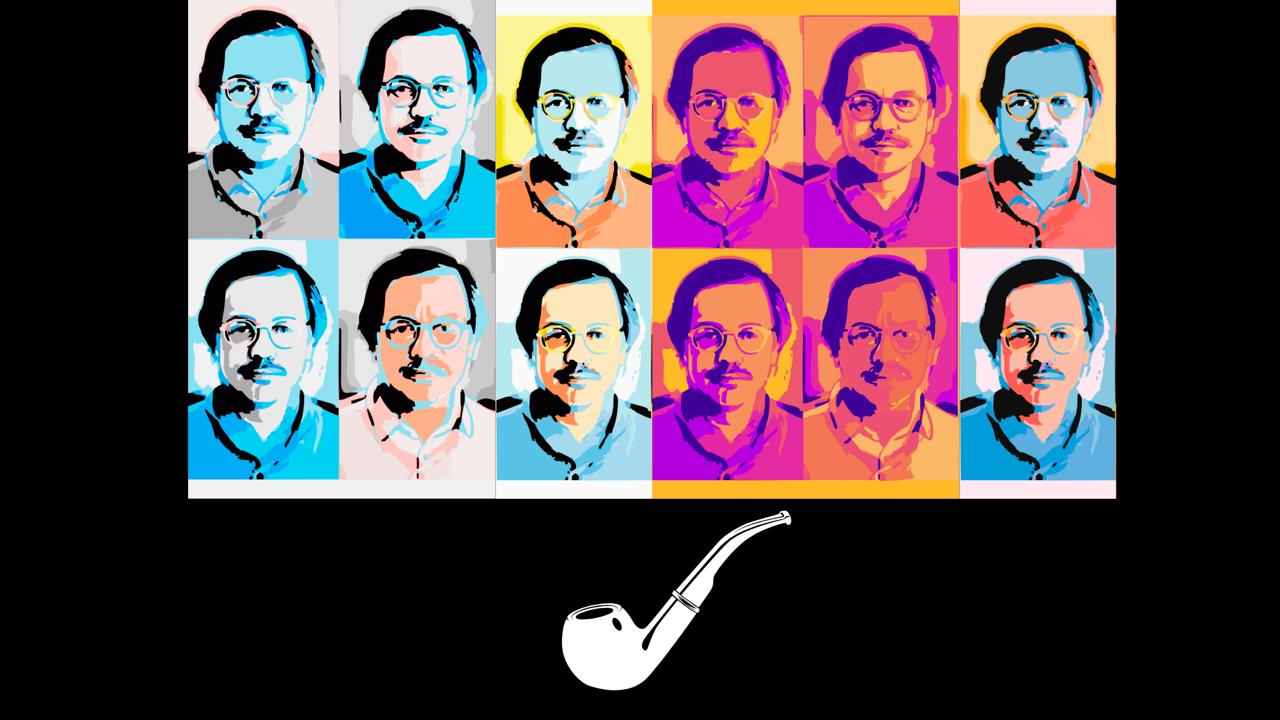
(in memory of Syed Manzoorul Islam)
I shall wear the bottoms of my trousers rolled.
I have heard the mermaids singing, each to each.
I do not think that they will sing to me.
— T.S. Eliot, “The Love Song of J. Alfred Prufrock” (1915)
I felt like writing about Manzoor Sir while struggling with some NGO work that was demanded of me: to wire things up, by replacing the pretense of liberalism with conservative regression that dominates today. Perhaps NGOs are modern monasteries, funded to pray for the sins of capital.
Sir had, for much of his life, spent time editing a range of silly and/or mediocre books, in which, often his preface was the best thing. Syed Manzoorul Islam joined hundreds of meetings, exhibitions, round-tables, conferences, and study-circles. With a tumbler in hand, he drifted among soft-speaking consultants with hard wallets and none of his empathy for poor Bangladeshis. As the rocks melted under a double shot of single malt, time ended for him, as it will for us all.
I have been his neighbour since I was a child, and once or twice, we shared the swimming pool. On one occasion, I showed him some sentimental poems—one of which was published on his recommendation. My journey as a poet did not continue. There were hundreds of wannabes he mentored with sincere care that is now slightly rarer that he is gone.
Life landed me a few years later in the colonial occupation of studying English literature, a decision I still regret, except that it allowed me to attend classes by a few like him. Before choosing BA English I discussed its prospect; he discouraged me. If you want to read literature, you can take a basket full of books from my place. But that never happened. I found myself as his student at Dhaka University, where he was indeed a true Master of poetry-teaching, capable of inscribing lines into the minds of students. “Do I dare disturb the universe”, was one such.
He was a true, hardworking gentleman—leather wristwatch, tucked-in full shirt, but sleeves rolled up to the elbows, often staring through his near-circular metal frame, Gandhian in simplicity. He was, overall, a pacifist. However, he knew very well that if a generation fails to use the ammo, the next generation will utilise it, just as in Seamus Heaney’s poem he taught us, Digging (1966):
Between my finger and my thumb
The squat pen rests; snug as a gun.
He once met Heaney at an Irish pub, he told us.
The off-script
My university life began with the struggle to swallow archaic vocabularies pointing to distant places and foreign feelings. The department couldn’t make me a reader of literature (because all English departments are but less-than-efficient machines for supplying linguistic compradors of the empire); I skimmed through photocopied summaries and excerpts and would sit for exams with confidence. I don’t remember much from his classes that were exam-relevant, but I fondly remember the irrelevant parts that he styled as “commercial breaks”.
In one of which, he asked us in the classroom of the Arts Faculty: “Do you know what crack is?” He said he had seen an anti-drug campaign outside an American airport. It read: Your mind is the most beautiful thing; don’t waste it, or something like that. This line had a lasting impact on me. I agree with the first part, and as I have grown older, I think, some people take risks, and that’s fine too. Minds will still remain beautiful.
Another day, he remarked, “I was astonished to hear someone saying, ‘Did you eat KFC?’” (Tumi ki KFC khaiso?) He understood the humour. This sentence is funny at various scales. I don’t want to break it down my way, but eating KFC rather than just chicken or fried chicken sounded eerier back then—the initial days of the free-falling fast food market in Dhaka.
On another occasion, again in class, he talked about being at a hair salon—maybe a place called Romeo Hairdresser. There was a lounge with magazines to read while people waited for their turn. In one such magazine, a hero of Dhakai cinema told the interviewer, “I have been sad from my childhood, so I have become a sadist.” Every time I think of that line, I laugh. I’m not sure whether the humour comes from what he said or how he said it—the urge of natives to use English terms, wrongly even. He, I must note, was a Bangla fiction writer and used as little English as possible, though he had an amazing English vocabulary, or perhaps he was the rare talent to use the right words in the classroom. I, however, believe we can use and repurpose English words in whatever way suits us—the international language users.
My relationship with academics and bourgeois literature drastically faded as time went on. I do not go to places where culture is happening; I simply cannot stand it, and as such, gradually his presence disappeared from my life after attending the last class on postmodernism.
The post-post condition
Postmodernism is a thing that didn’t age well; or perhaps at all. It was “post” from birth, but this infancy reflected itself in the literature that followed. It was playful and disruptive and prone to see the world as a child might, though some of that energy sat uncomfortably with the postcolonial academia, where most struggled to obtain a white doctoral certificate. Once that was secured, whatever may come, would come. Most were pushed, at best, into the study of postcolonial compartments (where Indian and dogs were allowed), and more often, they were recruited into the vocation of language teaching, coaching TOEFL, IELTS, and other forms of corporate extraction built upon the desperate minds of Third World academics. By the end of the 1990s, very few could pursue a successful career in any discipline with a postmodern spirit. By then deconstruction, for example, was thrown out of the foggy windows of American universities, only to be picked up by tri-cycling theory-boys elsewhere.
Literature proper itself experienced a steady decline, and at Dhaka University, more students were flocking into the linguistic stream—a mislocation of public funds, since the university already had a fully functioning Linguistics department and a Modern Language Institute to handle the para-scholastic areas. In MA class, we almost could not take the postmodernism course as there were too few students interested. So we went around, persuading naïve citizens of the English department, for whom scores mattered less (linguistic subjects cashed out higher marks than “po-mo.)”
The classes took place in Manzoor Sir’s chamber, not the regular designated classroom. The room bore the trace of his pipe, floral, woody, and faintly leathery. Out of fifteen enrolled, usually fewer than ten showed up. SMI roamed well beyond the syllabus with his jacket and jeans. For half of the postmodernism course, the lessons were about European fine arts movements; my assignment, one day, was to make a presentation on Post-Impressionism. I vividly remember him saying, “Can you see the Dark that is creeping into the canvas. It’s not more impressionism that depends on light.”†
He taught writers like Vonnegut. I still remember two details: the asterisks that stood for assholes, and two yeasts talking about the meaning of life.* Those moments introduced me to postmodern fiction’s refusal to separate satire from sincerity. He was much the same himself.
The Left Side
Manzoor Sir hailed from a prestigious Syed family of Sylhet. He shared that mixed feeling many Sylhotis have for people from other parts of proto-Bengal. But the people of Sylhet indeed chose what is now the rest of Bangladesh through a referendum.‡ SMI helped a lot of aspirants and nurtured a network that was close to his nationalistic project taking in both Sylhotis and non-Sylhotis, and more importantly both Syeds and non-Syeds.
I recall him telling another anecdote: at a dawat where he was invited, there was a man who ate a lot of everything. As in any Bangalee feast, a ridiculous number of dishes were served. Near the end, someone discovered a bowl of daal that had escaped him earlier. He was visibly excited, took some, and said, “I usually have my two grains of rice with this.” (Duita bhaat—as if hunger never left, by the East India Company, by Churchill, who let millions die yet was never called criminal). SMI smirked, but didn’t over-explain why it was funny, or perhaps tragic.
Sir had a couple of North American degrees obtained during the Cold-war era but at home he was connected to socialist politics and remained a true secularist. Following Perestroika, he continued to support and stand for the Leftist Pink Panel of Dhaka University teachers, which tried to stay out of the bipolar politics of Bangladesh. But it was later virtually merged into and co-opted by the Blue Panel, a highly educated group blindly following the bourgeois-nationalistic Mega-party.
As a postmodern fiction writer—a vocation he seemed to love the most and excelled in—Syed Manzoorul Islam will be remembered. He was a public figure too; a furrow-browed intellectual but with an open heart. A great deal of the intelligentsia can switch sides to stay under the protection of the ruling cohort. SMI largely remained on the losing, and therefore the right side of history; that is one more reason.
P.S.
I met him several times after graduation, though. One such occasion was the one TV programme I hosted; he was a guest. The programme was live, telecasting a solar eclipse. A strange connection, perhaps. The last time I saw him was while entering an elevator. There was still room for people, but I’d better stay on the ground.
Notes
* “Kilgore Trout once wrote a short story which was a dialogue between two pieces of yeast. They were discussing the possible purposes of life as they ate sugar and suffocated in their own excrement. Because of their limited intelligence, they never came close to guessing that they were making champagne.” — Kurt Vonnegut, Breakfast of Champions (1973)
† The term “Impressionism” came from Claude Monet’s painting Impression, Sunrise (1872). One critic mocked it as barely an “impression,” but the artists adopted the word, and it became the name of a movement.
‡ Sylhet Referendum (1947): Held on 6–7 July to decide Sylhet’s fate between Assam and East Bengal. A majority voted for East Bengal; later, the Radcliffe Award (12 August) left some Karimganj thanas with India.